The Gulfstream Racetrack
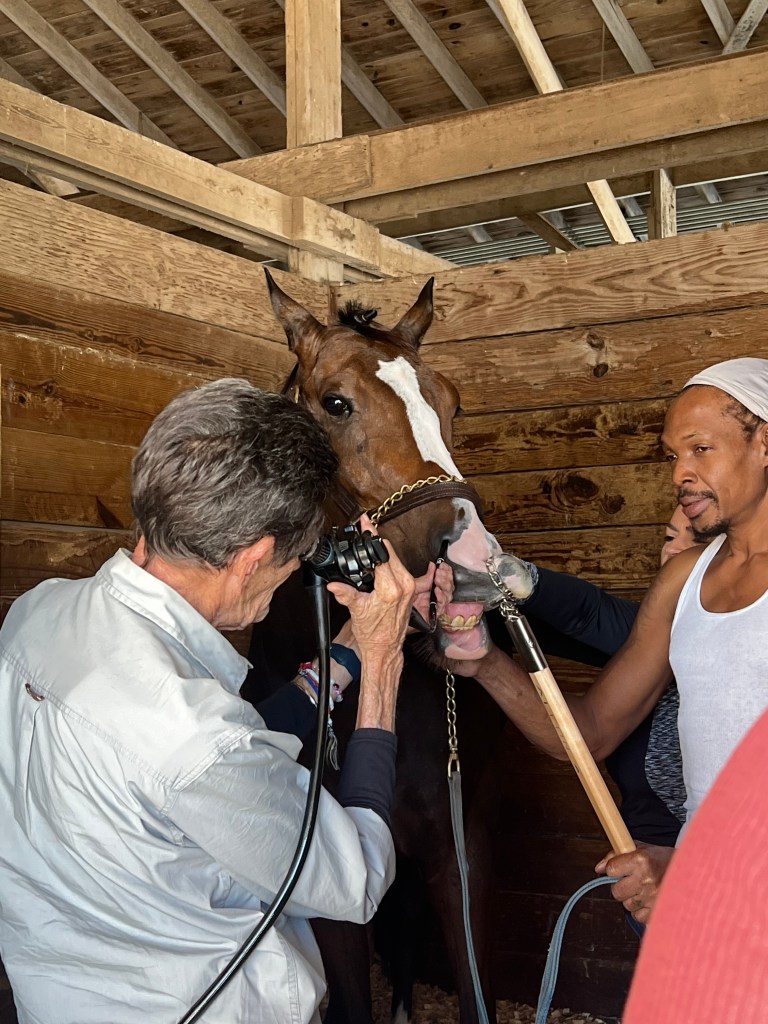
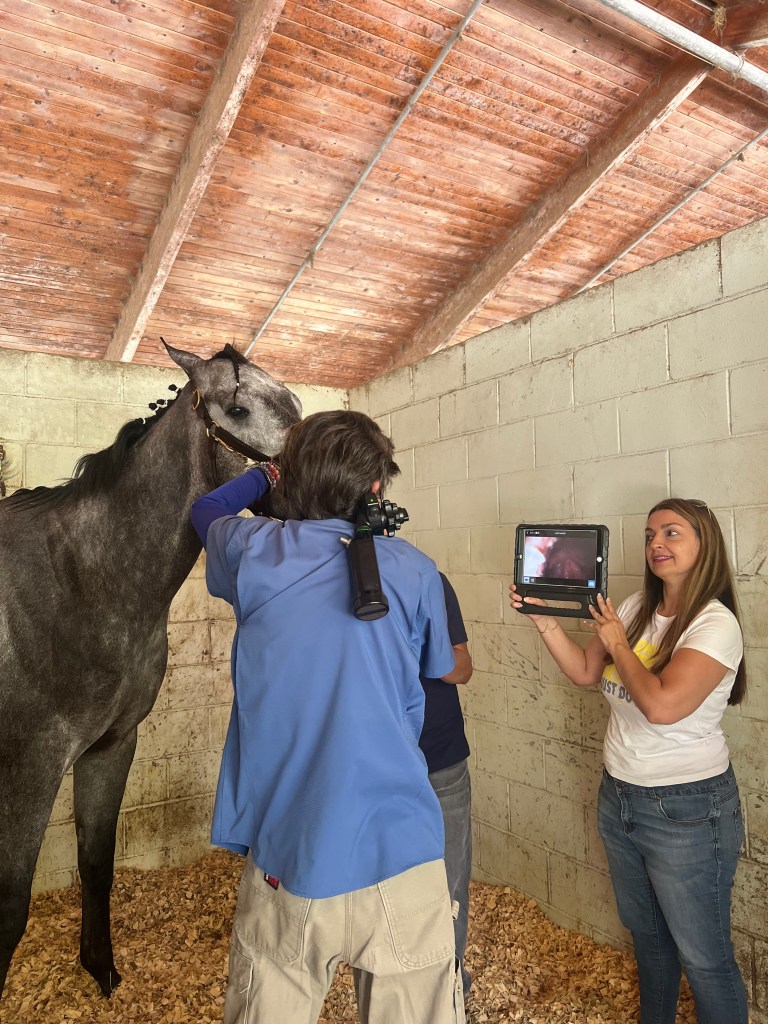
I have the privilege of being able to shadow Dr. Celestino Iriarte’s work at the Gulfstream RaceTrack. A lot of his duties consist of conducting tracheal endoscopies for horses that have just completed a race to observe for any respiratory complications or internal bleeding. Above are some images of the scopes in action – the image on the left shows Dr. Iriarte utilizing a fiberscope which consists of flexible optical fiber bundles with an eyepiece to directly visualize the path of the scope. The image of the right shows an endoscope that includes the use of a camera/tablet to visualize the larynx rather than an eyepiece.
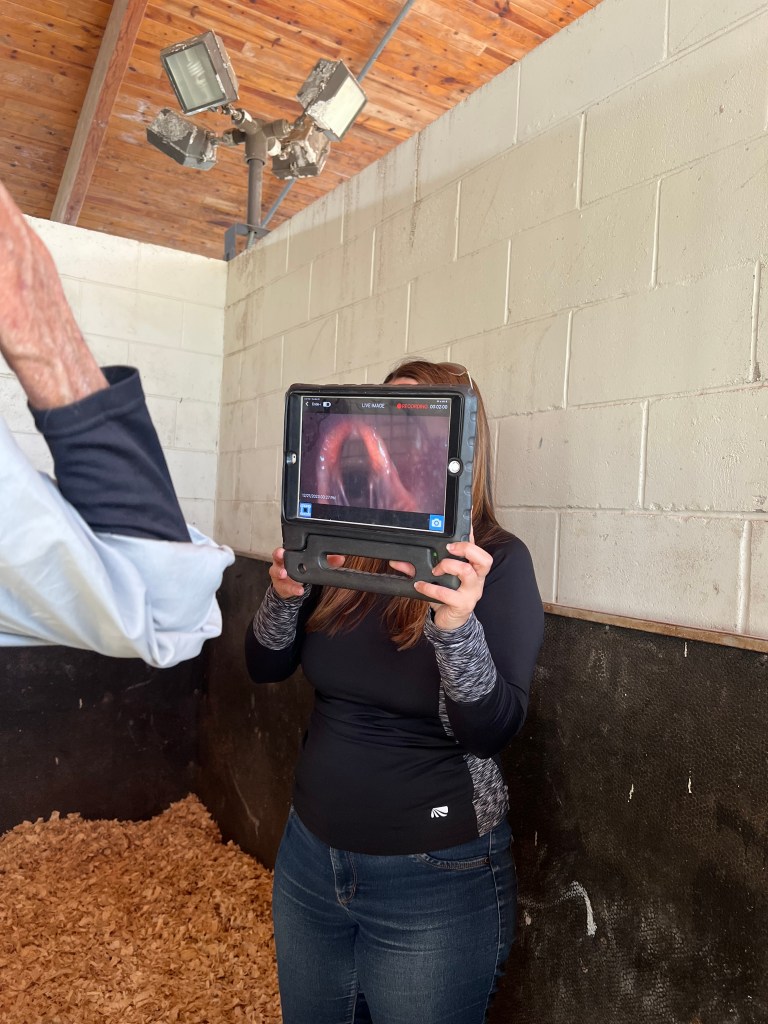
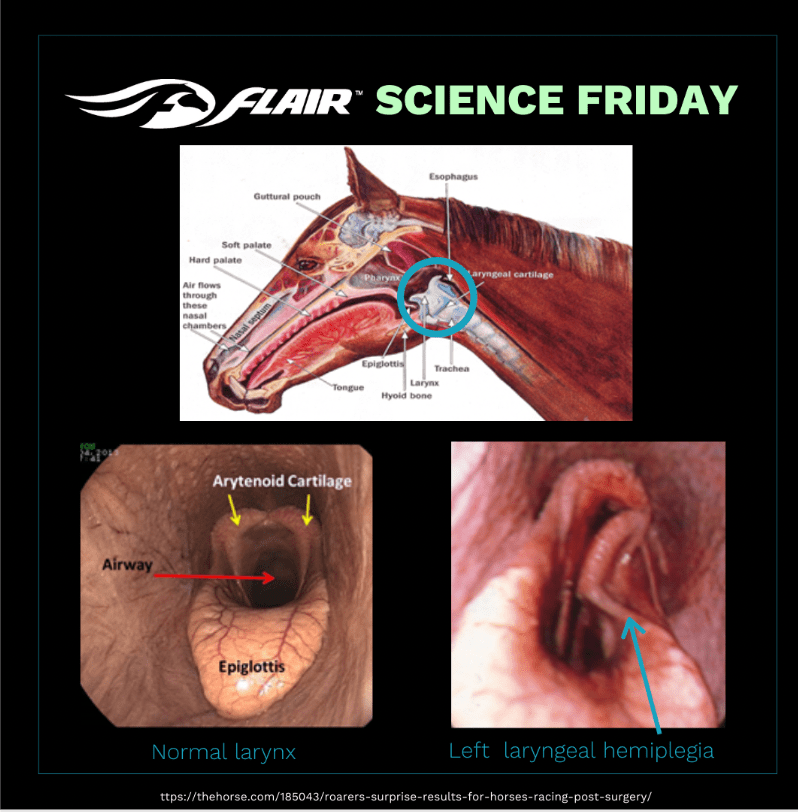
Due to the frequency of high-intensity exercise that racetrack horses endure, they are often at risk for respiratory complications, bleeding, and laryngeal conditions occurring in the larynx. The larynx or voice box, is composed of muscle and cartilage near where the pharynx divides into the trachea and esophagus; it connects the nasal passage to the windpipe.
Laryngeal Hemiplegia
A prevalent laryngeal condition often observed in racehorses is laryngeal hemiplegia. Pictured above, this occurs when the nerves supplying the muscles of the larynx experience progressive neuropathy and leads to an inability to abduct the arytenoid cartilage and vocal fold away from the airway. As you can see in the picture above as well, this most commonly occurs on the left side due to a larger area of nerve innervation. This condition is thought to be caused by genetic predisposition or trauma to the neck when being controlled during racing.
A large indication of this condition is a recurring whistle or “roaring” noise produced by the horse when exerting energy. This is due to reduced airflow through the airway and results in poor performance and exercise intolerance.
Therefore, endoscopic observation of this reduced or absent abduction of the cartilage and vocal fold in horses post-exercise is extremely important! This condition can be treated with simply rest, or in extreme cases a “tie-back” procedure where the arytenoid cartilage can be anchored to the adjacent cricoid cartilage.
Exercise Induced Pulmonary Hemorrhage
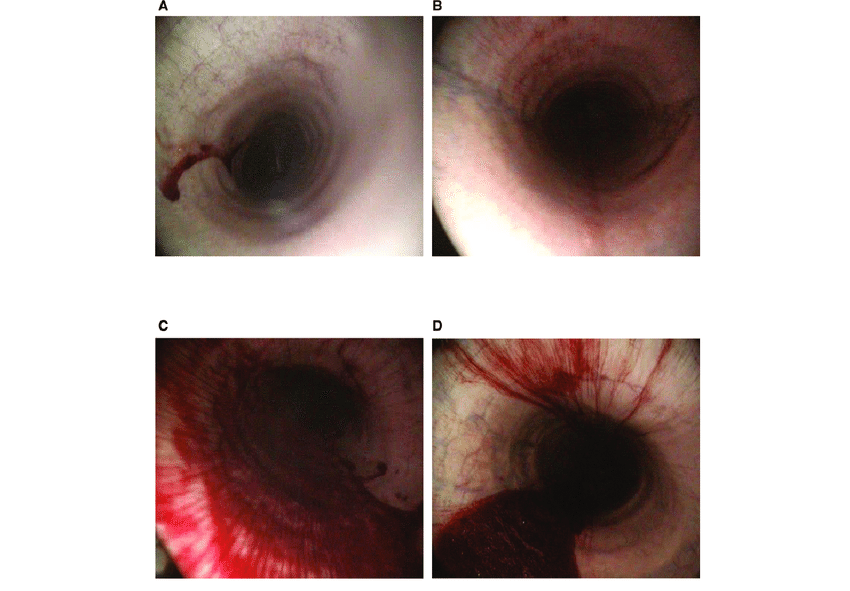
Another widespread injury in thoroughbreds due to intense exercise is bleeding in the lungs, caused by the rupturing of fragile pulmonary blood vessels. This can also be detected through an endoscope of the trachea and is graded on a scale of 1-5 based on the intensity of the bleed. Many trainers order endoscopes for their horses immediately after a race to detect this silent bleed.
The image on the left provides examples of the grades of pulmonary hemorrhages that can be detected. A grade 1 does not show much bleeding, but the sight of blood is present along the trachea. The more blood that covers the walls of the airway, the higher the grade given. A grade 5 can be seen showing large amounts of blood covering the entire tracheal surface along the entirety of it.
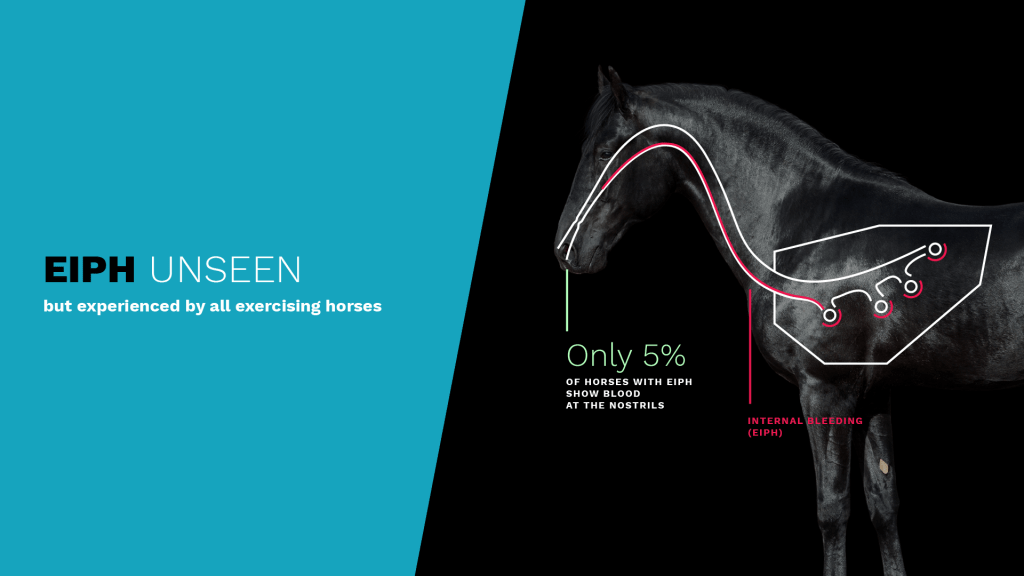
This condition is commonly treated through the administration of a diuretic, which slows bleeding by reducing blood volume and increasing urine production.
 Tailoring Vet Med