This page is specifically dedicated to the development of my capstone research project focused on analyzing dental disease specific to a shelter setting.
Dental Disease Incidence in the Shelter and How it May Impact Animal Outcomes
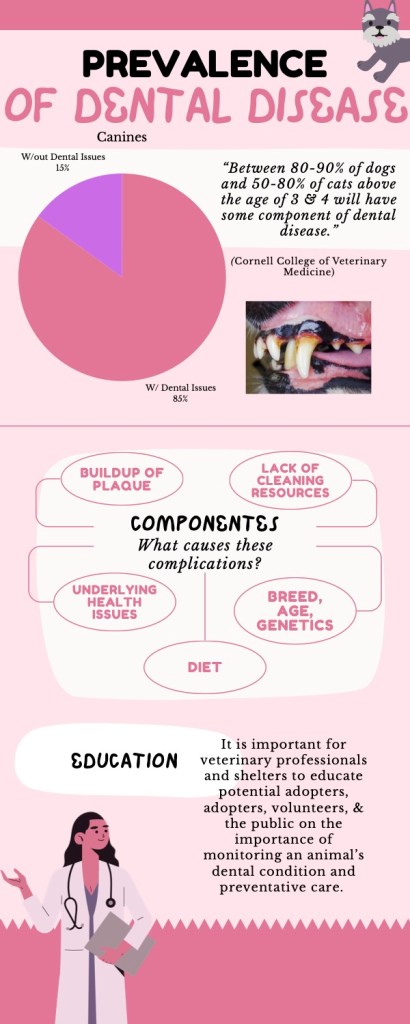
Why This Topic & What Does it Look Like? – At the beginning of 2025, I began working as a veterinary assistant at the Edgewater Pet Clinic, a veterinary general practice specializing in dentistry. My work here first introduced me into the proper diagnostic and clinical interventions involved in pet dental care. Around the same time, I also began my clinical internship at Zoo Miami, where one of my first few weeks involved “Dental Week”, a specialized time of the year dedicated to providing a wide range of collection animals with dental treatments.
Specific to shelter medicine, my coursework throughout this program made me interested in exploring the topic of dentistry specific to shelter animals. Because dental disease is so prominent, it is likely to assume that these animals are also entering the shelter. How are shelters managing this problem with large animal populations and limited resources?
Problem Statment
Dental disease is an inevitable issue that affects shelter animals; however, shelters often lack resources such as radiography, dental equipment, specialized dentistry training, and a proper diagnostic system that allows for adequate tracking and treatment of these issues.

This study published in the Brazilian Journal of Veterinary Research aims to further explore and present the clinical, radiological, cytopathological, and virological aspects of periodontal disease and what these complications present in nine shelter cats with the disease. Cats were physically evaluated and all shared symptoms of lymphadenomegaly, excess salivation, oral lesions, and some also victim of diseases such as ulcerative paradental stomatitis, faucitis etc. It is no doubt that stray/shelter animals are exposed to lots of bacteria and inconsistent, proper cleaning & care⁹.
Research Objectives
Following the presentation of my research, audience members will be able to assess:
- Which dental diseases impact canines and felines the most?
- How local and national shelters may implement dental care into their systems.
- How these can systems more effectively recognize, handle, and treat these cases.
Hypothesis
- Because these dental complications are so prominent, it is likely to assume that these animals enter the shelter.
- Most local shelters may not have a concise, dental specific way of flagging and detecting these disease amongst their animal populations.
- Shelter staff require additional training and resources to effectively address and treat dental diseases on time. Some shelters may lack staff members who possess the specialized dental training.
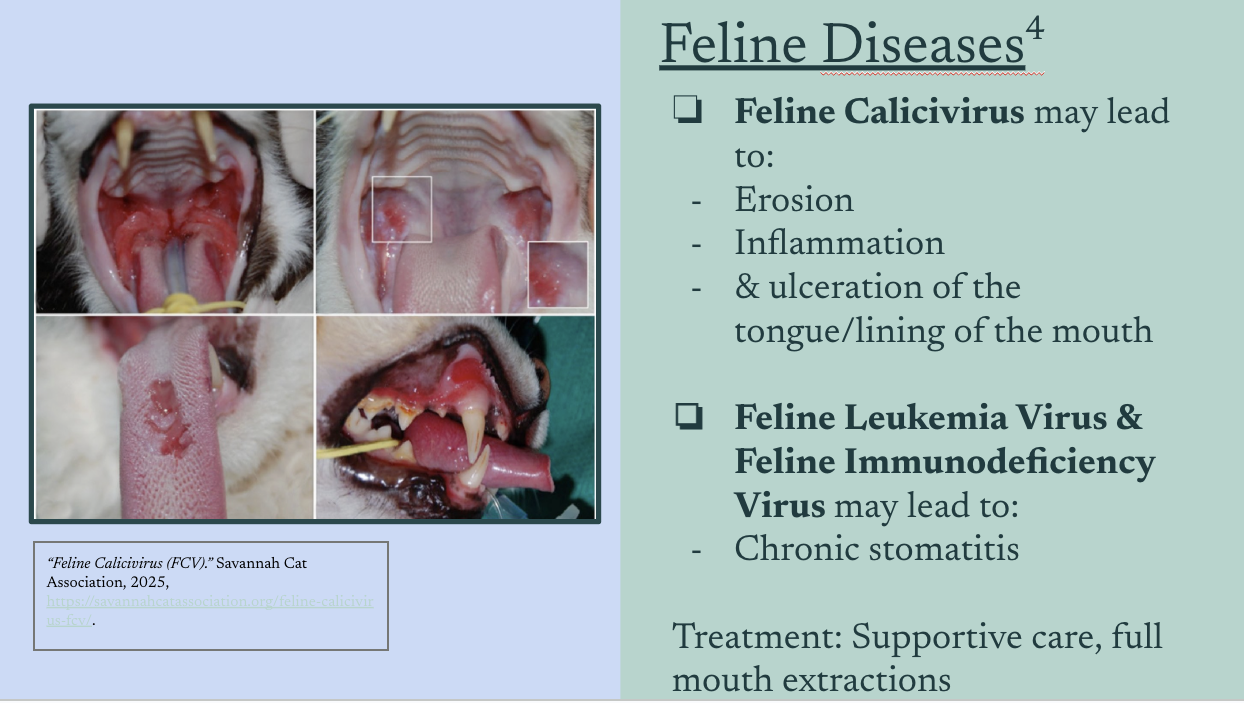
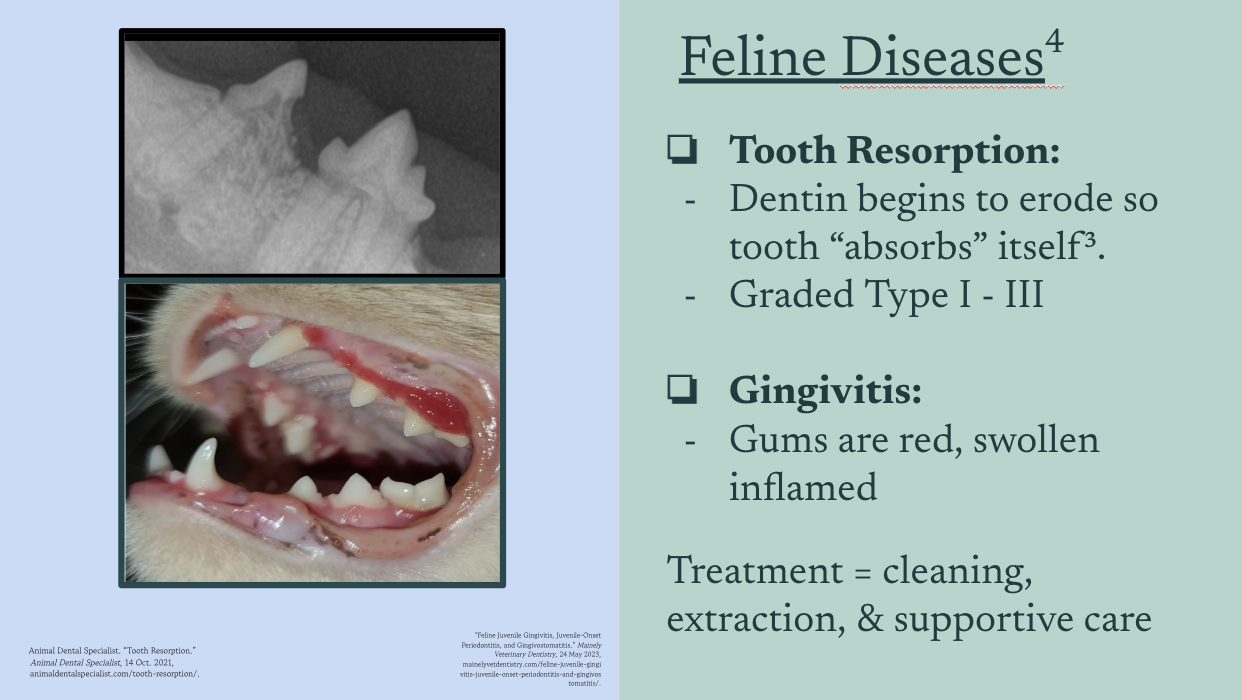
Most Frequent Dental Diseases in Dogs & Cats
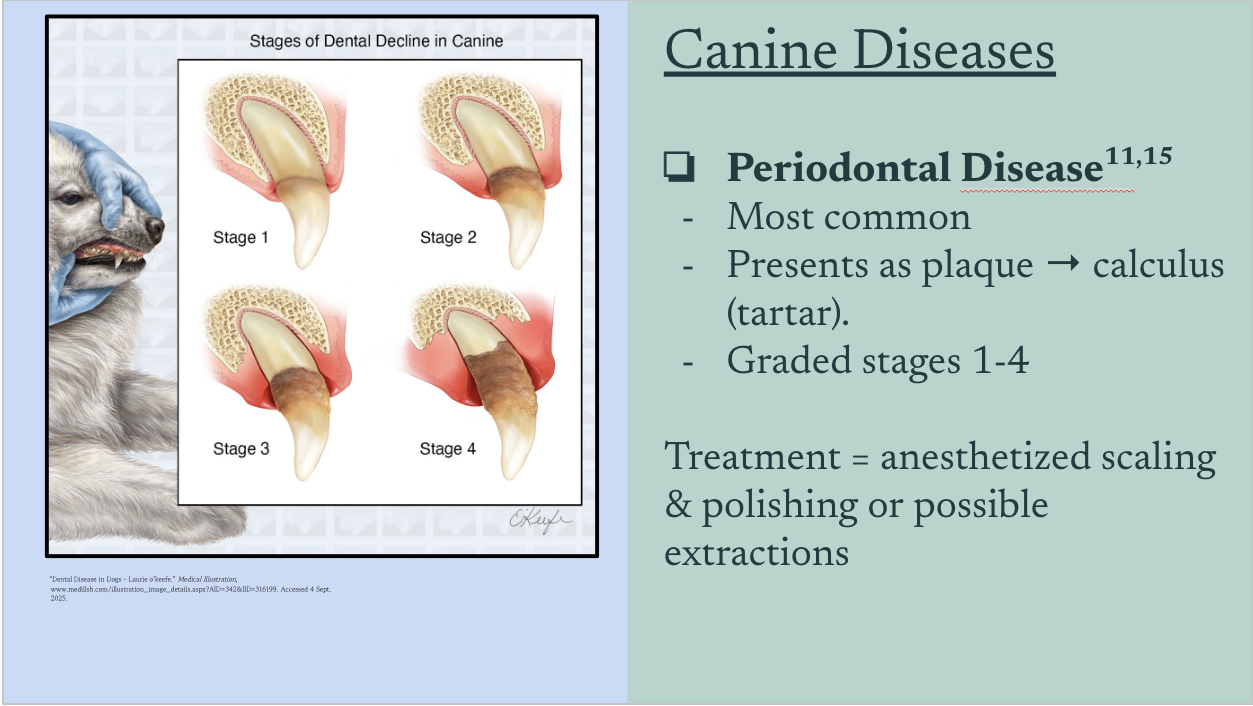
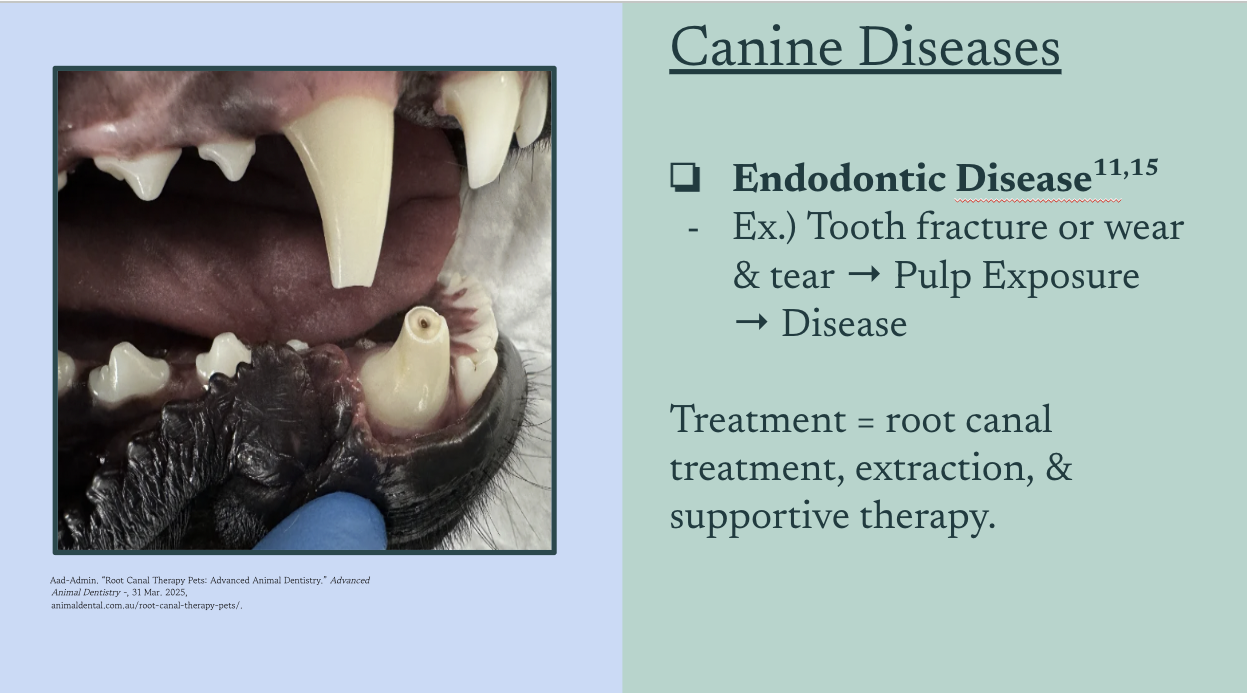
Full Interview Responses
Dr. Hanthorn, DVM
Dentistry/Oral Surgery Resident Veterinarian
Dr. Wright, DVM, M.S.
Private Practice Veterinarian
Dr. Stredel, DVM
General Practitioner with a Special Interest in Dentistry
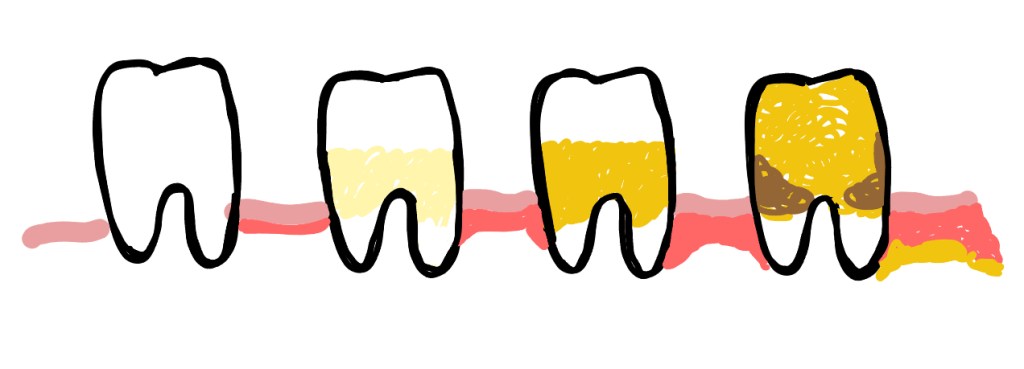
Which matches your pet’s teeth?
 Tailoring Vet Med